
If you run a shop, a restaurant, or any retail business, you are already using a Point of Sale (POS) system — even if it is just a calculator, a notebook, and a cash drawer. But in a world where customers expect speed and business owners need data, getting by with a basic setup is a recipe for burnout.
A modern POS is not just a digital version of a cashier desk. It is the command center of your entire operation.
What is a POS System — Really?
At its simplest, a Point of Sale (POS) system is where your customer makes a payment for goods or services at your store. It processes the sale, records the transaction, and handles the exchange of money.
However, the billing part is just the tip of the iceberg. A true POS system manages the vital organs of your business:
- Inventory Tracking: knowing exactly what you have left the second a sale is made
- Sales Analytics: identifying your best-sellers and your slowest hours
- Employee Management: tracking who is selling what and managing shifts
- Customer Data: remembering your regulars and what they like to buy
When your POS is working correctly, it stays in the background. When it fails, it becomes the loudest problem in the room.
Why Your Business Depends on It
Imagine it is your busiest hour. The queue is stretching toward the door. Your cashier scans an item, and the system freezes. Or worse, the internet blips, and suddenly you cannot process card payments.
This is where the hidden costs of a bad POS reveal themselves:
- The Bottleneck: long lines lead to basket abandonment — customers literally walking out because the wait is not worth it
- The Data Gap: if you have to record sales manually during a crash, your stock levels will be wrong by the end of the day
- The Discrepancy: at closing time, the cash in the drawer does not match the reports — you do not know if it was a mistake, a missed entry, or something worse
A reliable system ensures that a busy day is a profitable day, not a chaotic one. It gives you peace of mind that the numbers at 9:00 PM will match the activity at 9:00 AM.
What to Look for in a POS Solution
Do not buy a POS based on how the hardware looks on your counter. Choose it based on how it handles the worst-case scenarios.
- Speed and Simplicity: if it takes five clicks to add a discount or split a bill, your system is too slow. Your staff should be able to learn the basics in ten minutes, not ten hours.
- Offline Resilience: the internet is not 100% reliable. Your POS should be. Look for a system that can process transactions offline and sync them back to the cloud once the connection returns.
- Real-Time Inventory Sync: your POS should talk to your warehouse — or your back room — instantly. You cannot sell what you do not have, and you should not have to do a manual count every Sunday night to find that out.
- Actionable Insights: a good system does not just give you a pile of data; it gives you answers. Which staff member is most efficient? Which product has the highest margin? When should you staff up for the weekend rush?
Built to Run. Ready to Scale.
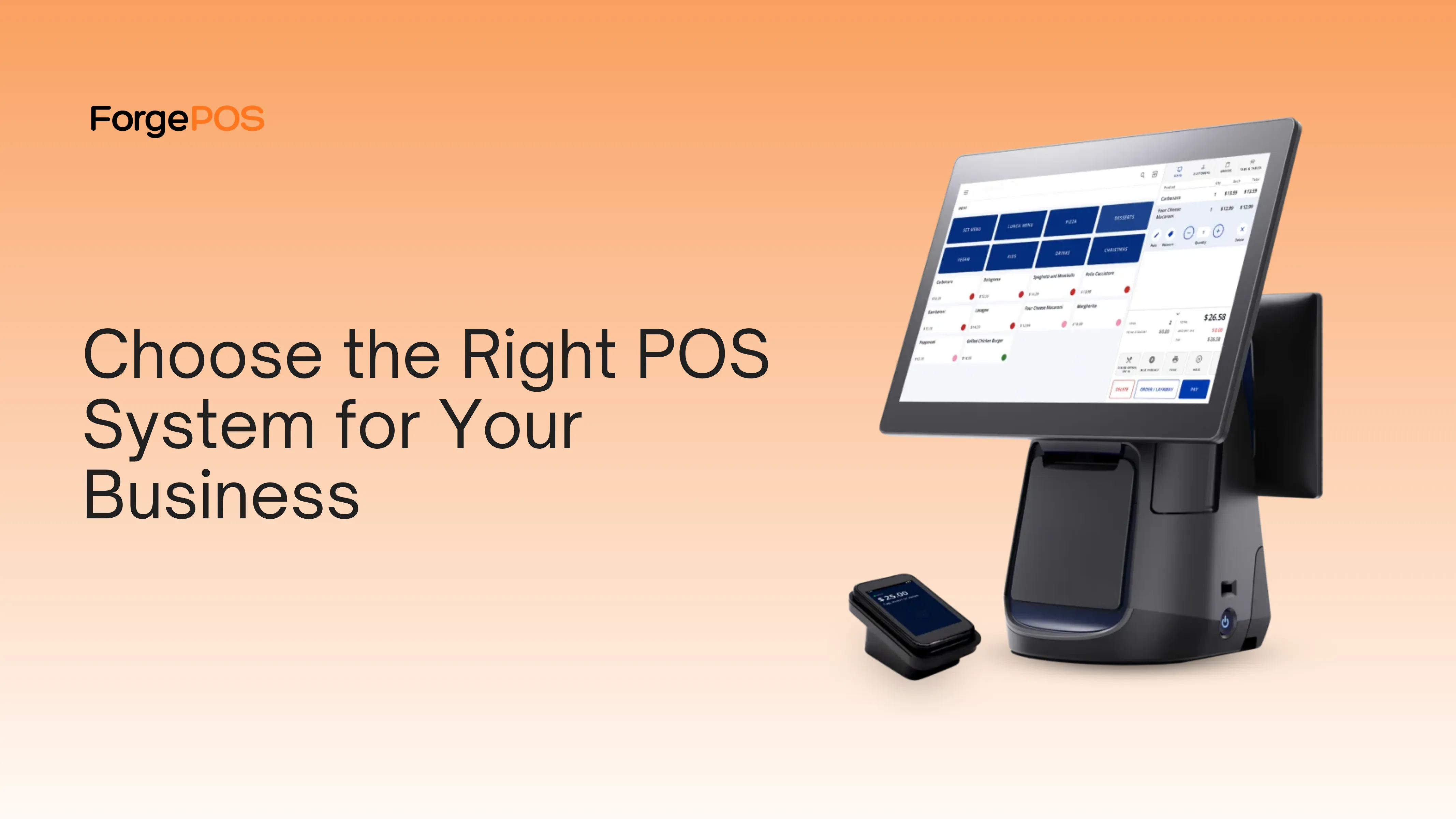
At Scriptforge, ForgePOS is designed for speed and flexibility, whether you are running a single boutique or a multi-location franchise. We do not believe in gating the features you need behind expensive upgrades — you get everything you need to run your business from day one.